

Emilio Rabasa Gamboa
The concept of sovereignty, traditionally confined to the theory of the state and constitutional law, has now entered everyday public debate in connection with Trump’s provocations aimed at “solving” drug trafficking into his country through the presence of his Marines in ours, as well as his aggressive foreign policy toward Greenland (Denmark), Venezuela, Iran, and now the threat to Cuba.

Sovereignty is strongly linked to multilateralism, such that when the latter enters a crisis—as it does today—it drags the former down with it. It thrives when the powerful are constrained by international rules that apply to all.
But what is sovereignty? And in whose defense is it invoked?
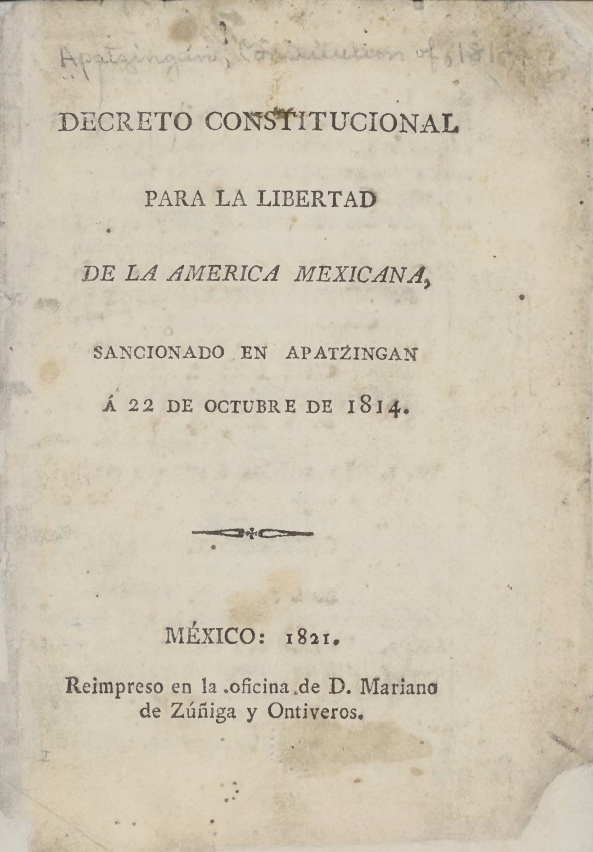
We find an unbeatable definition in our constitutional history. The Constitution of Apatzingán (1814) states in Article 2: “The power to enact laws and to establish the form of government that best suits the interests of society constitutes sovereignty,” and adds: “This is, by its nature, imprescriptible, inalienable, and indivisible” (Art. 3). It further established: “Consequently, sovereignty resides originally in the people, and its exercise in the national representation” (Art. 5). Consequently, the sovereign has the unquestionable right to establish the government that best suits it, to alter it, modify it, and abolish it entirely (Art. 4). No other constitutional charter developed the concept of sovereignty as clearly as the one from Apatzingán, inspired by the fervor for independence from Spain.
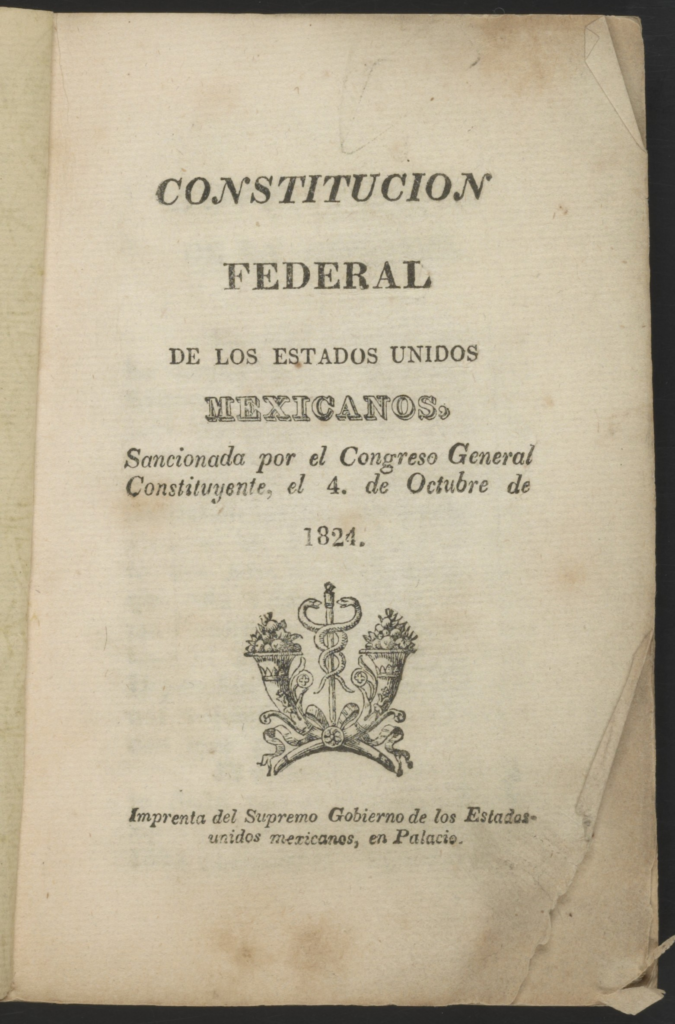
However, the Constitutive Act of the Mexican Federation of 1824 incorporated another idea of great importance today, in its Article 2: “The Mexican Nation is forever free and independent from Spain and from any other power, and is not and cannot be the patrimony of any family or person.”
Combining both constitutional charters, we have a concept of sovereignty composed of three elements: 1) the exclusive power of MEXICANS to enact laws and establish and change the form of government that best suits us; 2) Mexico’s freedom from any other power; and 3) the Mexican Nation cannot be the property of any family or individual.
When President Sheinbaum invokes sovereignty in the face of Trump, she draws on points 1 and 2 of that constitutional definition, because accepting the interference of U.S. armed forces to combat the cartels on our territory undermines our right and duty to confront them ourselves with our own means, in the face of that power.
But what is called into question in the case of Rocha Moya, accused of criminal association with the Sinaloa cartel to win the 2021 state elections, is the third element, that is, our sovereignty is severely violated when the nation is also turned into the shared property of a family (the Chapitos) or an individual (El Chapo, Mayo, or Mencho) by consenting to and even seeking their illegal intervention to tip the scales in an election, which is solely for the citizens to decide.

I agree with President Sheinbaum in defending our sovereignty against any foreign power. Still, I do not agree that this defense is not being extended to the surrender of our territory to organized crime.” Just as treacherous is the one who invokes the intervention of a foreign power (like the conservatives Almonte, Gutiérrez Estrada, Miramón, and Márquez before Napoleon III) to solve our problems, as the one who relies on organized crime to win an election and seize power.

The defense of our sovereignty is either comprehensive against powers, families, and individuals, or it is no defense at all.

Further Reading: