
Reforming Laws: The Illusion of Change in Mexico.

Sergio Elías Gutiérrez critiques the legislative trend where lawmakers frequently enact new laws to address various issues, often without understanding their implications. The current administration has accelerated lawmaking, impacting sectors like economy and agriculture. There’s a call for effective public policy over mere legislation, given the persistent enforcement failures and high impunity rates.

Corruption and Justice: The Pemex Pension Controversy Explained.

The tragic fall of sociologist Carlos Fernández Márquez from a Pemex office tower sparked widespread speculation regarding his death, officially recorded as an accident. Over a decade later, legal battles ensued over his widow’s pension amidst accusations of corruption, leading to renewed investigations and calls for fair legal proceedings.

Claudia Sheinbaum and Maria Corina Machado: A Clash of Political Ideologies.

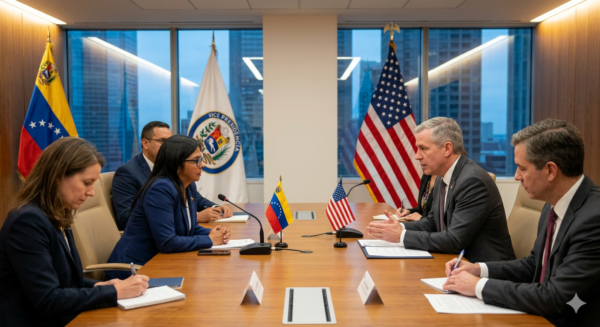
The imagined meeting between María Corina Machado and President Claudia Sheinbaum would be fraught due to their contrasting views on Venezuela. Machado aims to discuss resistance to Maduro’s regime, while Sheinbaum defends Mexico’s support for Maduro, highlighting a principled non-intervention stance. Ultimately, their positions are irreconcilable, making the meeting unlikely.

Its Name Is Terrorism.

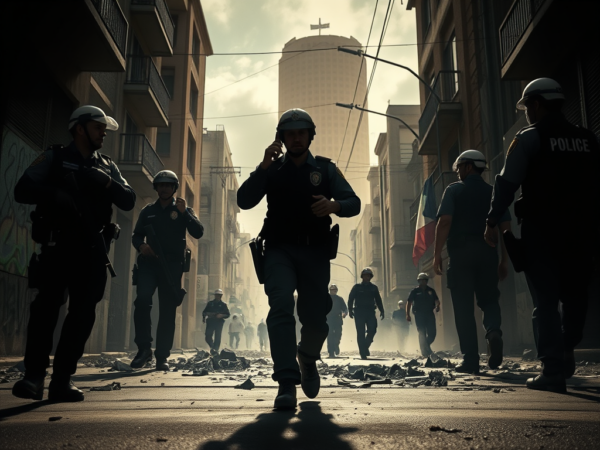
Sometimes societies become so used to certain outbreaks of violence that they lose sight of what they really represent. We name the events lightly, soften concepts, or reduce them to convenient explanations. But in doing so, we also dilute our ability to understand the true scope of what we are facing. When a government refuses to call terrorism what—by definition—is terrorism, it ends up defenseless against those who have decided to use fear as a tool of power.

The Role of Foreign Intervention in Latin America: A Dilemma for Democracies.

Venezuela’s political turmoil raises questions about interventionism versus national sovereignty. María Corina Machado faces criticism for supporting US measures against Maduro, seen by some as a new colonialism. Supporters argue Maduro’s regime is illegitimate, backed by external powers. A democratic alternative is essential to prevent dictatorship and foreign invasions in Latin America.

China vs Mexico: Lessons in Development Models.

The content explores the contrasting development paths of nations like China and Mexico. Dan Wang emphasizes China’s rapid infrastructure advancements, while Carl Frey highlights the need for a balance between centralization and decentralization for effective progress. Both authors argue against blindly imitating successful models without considering local contexts. Mexico’s challenges stem from a lack of this balance.

The Nobel Prize in Economics is Explained Simply.

Joel Mokyr, Philippe Aghion, and Peter Howitt won the 2025 Nobel Prize in Economics for their contributions to understanding economic growth through “creative destruction.” Their work clarified how innovation transforms markets, enhancing productivity and well-being, while emphasizing the necessity for continuous renewal as a driver of societal advancement and economic resilience.

The Role of Ethics in Global Politics and Human History.

The content discusses the role of ethics in history and modern society, highlighting global challenges such as migration, racial tensions, and governance failures, particularly in the U.S. and Mexico. It emphasizes the need for ethical leadership and cooperation in addressing crises, while critiquing demagoguery and the loss of democratic values.

2027 Election: Morena’s Key Conflicts and Decisions.

The 2027 election poses significant challenges for President Sheinbaum and her party, Morena, as they navigate complex electoral reforms and candidate selections. The looming conflict with López Obrador, who asserts his influence over candidate appointments, raises concerns about governance and party unity, echoing historical political struggles in Mexico. Time is critical.

The Year of War.

ith less than four weeks to go before we bid farewell to 2025—amidst the fury, the din, the missiles, and the drones—it is inevitable that we pause and take stock of how, in our political and social sphere, we will close out the year. Now that the first quarter of the century is over, we understand that we are not living in exceptional circumstances. Each period leading up to the world wars was unique in its time, yet they all shared the same air of menace.

Shares