
Is Criticizing Synonymous With Lying?

Socrates’ death raises questions about citizen freedoms in relation to state power, relevant today amid calls for a special court to punish journalists criticizing the 4T government. This move aims to silence dissent, equating legitimate criticism with lies, undermining press freedom and, ultimately, democracy in Mexico.

I Told Them No…

Repeatedly denying something usually causes doubt in the listener. Why deny the same thing so many times? Why isn’t a single, categorical denial enough? To such an extent that in Christianity, there is the story of the three denials of the disciple Peter. Despite his promise to remain loyal to Jesus, even unto death, he ends up denying him three times under social pressure.

Back to the Porcupine.

Luis Rubio discusses the evolving yet contentious U.S.–Mexico relationship, marked by historical books reflecting their communication struggles. The integration grew from economic necessity, illustrated by NAFTA’s dual interpretations. Today, ideological gaps and regional challenges persist, as both nations grapple with migration, crime, and differing perspectives on cooperation and reform.

The United States: The Consequences of Broken Leadership.

Pristina, Kosovo.– In this Muslim-majority capital, there is a statue of President William Clinton; you enter via George W. Bush Boulevard. In front of the hotel where I am staying, there is a bronze bust of former Secretary of State Madeleine Albright.

Is Mexico a Sovereign Republic?

Sheinbaum’s frequent invocation of sovereignty as a response to US pressures on crime and fentanyl trafficking misrepresents reality. Mexico lacks true sovereignty, as significant territory is controlled by drug traffickers, and the democratic foundations are eroding. The political landscape reflects complicity, censorship, and diminished representation, challenging national integrity and independence.

That Monstrosity Called Fear.

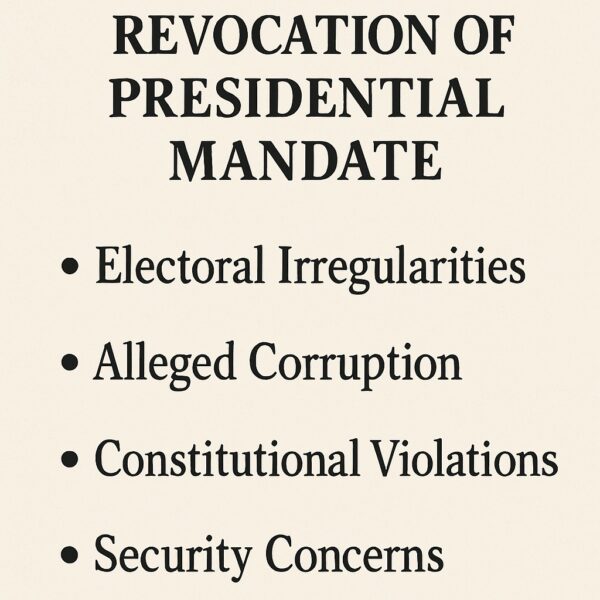
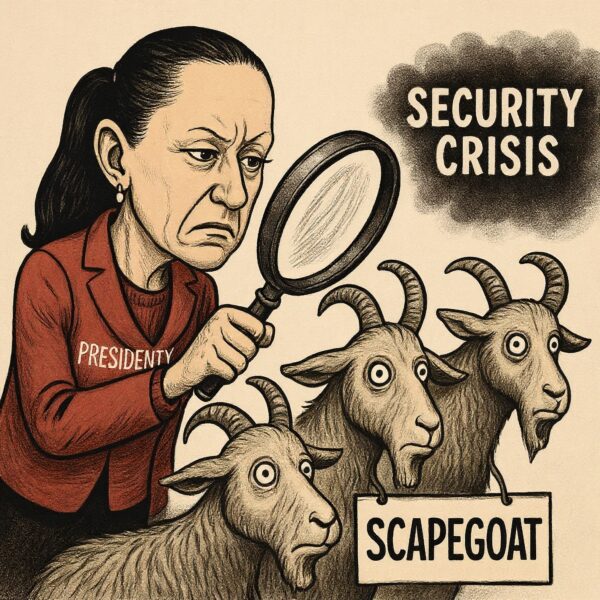
President Sheinbaum’s revival of political reform highlights the ruling party’s fear of power loss, despite a congressional majority. The proposed reforms aim to control state institutions, limit electoral competitiveness, and suppress dissent, revealing a government that, despite its strength, feels vulnerable. This illustrates a fragile grip on power amidst radical authoritarian strategies.

From Yalta to Alaska.

Eighty years after the Yalta Conference, where major powers divided post-World War II territories, the recent Trump-Putin summit in Alaska starkly contrasts in purpose and outcome. Unlike Yalta, which established frameworks for future peace, the Alaska meeting failed to address the Ukraine conflict. Their approaches and lacks of vision highlight contemporary geopolitical challenges.

Why Ukraine’s War Cannot End.

The article highlights the persistent historical amnesia regarding the Ukraine conflict, emphasizing the need to understand the roots of Russian insecurities and the implications of NATO’s eastward expansion. It argues that resolution requires a reassessment of post-Cold War security dynamics, acknowledging the fears of both Russians and Europeans to achieve peace.

The Chinese Meander.

Over the past fifty years, Mexico has undergone significant political and economic shifts, oscillating between authoritarianism and sporadic democracy, without establishing a sustainable model. Recent attempts to mirror the Chinese model under AMLO emphasize political control over economic growth, revealing a disconnect between governance, economic policy, and private investment stability.

Shares