
The Double Standard of Moral Outrage in Mexican Politics.

The post criticizes the hypocrisy of leftist Mexican opinion on international law, highlighting their selective outrage against the US while defending authoritarian regimes. It argues that invoking sovereignty to protect dictators is opportunistic, noting historical examples where moral responsibility superseded legal constraints. Ultimately, it warns that ideological consistency jeopardizes Mexico’s national interest in trade and diplomacy.

Governments vs. People: Navigating Sovereignty in Latin America.

The text discusses the evolving relationship between state sovereignty and individual rights, highlighting the inadequacies of the UN in addressing modern issues. It critiques the actions of authoritarian regimes and the failure to uphold human rights, particularly in Latin America. The dilemma of defending people versus governments is central to the discussion.

Unmasking the Dual Standards in Latin American Diplomacy.

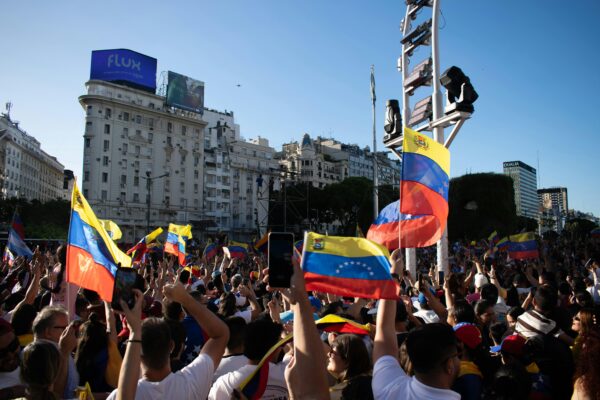
Brazil, Chile, Colombia, Uruguay, Mexico, and Spain issued a joint statement condemning unilateral military actions in Venezuela, emphasizing adherence to international law and advocating for dialogue led by Venezuelans. However, the critique highlights the hypocrisy of these nations, which previously failed to challenge Nicolás Maduro’s human rights violations and electoral fraud.

Neither Less Poverty, Nor Less Violence.

The National Institute of Statistics and Informatics (INEGI) reported optimistic economic data for Mexico, claiming job growth and reduced crime. However, real incomes are declining, and most workers are in the informal sector, leading to increased poverty. The government’s statistics misrepresent the harsh realities facing many citizens, particularly regarding violence and economic hardship.

The Role of Foreign Intervention in Latin America: A Dilemma for Democracies.

Venezuela’s political turmoil raises questions about interventionism versus national sovereignty. María Corina Machado faces criticism for supporting US measures against Maduro, seen by some as a new colonialism. Supporters argue Maduro’s regime is illegitimate, backed by external powers. A democratic alternative is essential to prevent dictatorship and foreign invasions in Latin America.

U.S. National Security Strategy.

This official report of the United States Government outlines the priorities of the Trump administration concerning foreign policy, revealing a shift in its geopolitical strategy and values.

The Economics of Attention.

The essay discusses the evolution of attention economy from the invention of the bikini by Louis Réard in 1946 to the digital revolution. Yanis Varoufakis argues that society has shifted from tangible goods to a system where attention is commodified, creating techno-feudalism. Users, now products, face a challenge in reclaiming focus amidst constant distraction.

The Global Organized Crime Index 2025.

The global criminal landscape is increasingly adaptive and complex, shaped by socio-economic shifts and technological advancements. The 2025 Index highlights critical changes in drug markets, the rise of non-violent crimes, and growing foreign and private sector involvement. It indicates an urgent need for new resilience strategies to counter evolving organized crime.

The Impact of Governance on Economic Development.

The key to a nation’s progress lies in balancing governmental and market roles, ensuring a capable state that safeguards property rights and functions effectively. Successful examples highlight that while democracy is important, a strong, rule-abiding state is crucial for sustainable growth and prosperity, as evidenced by varied global outcomes.

U.S. National Security: Mexico’s Strategic Role.

The United States views Mexico as a crucial player in its geopolitical strategies concerning Latin America, particularly in relation to Venezuela and Colombia. Recent actions suggest a testing ground for influence in Mexico, amid concerns about its alliance with drug traffickers and opposition to U.S. policies. Mexico’s foreign policy risks increasing regional tensions.

Shares