
Luis Rubio
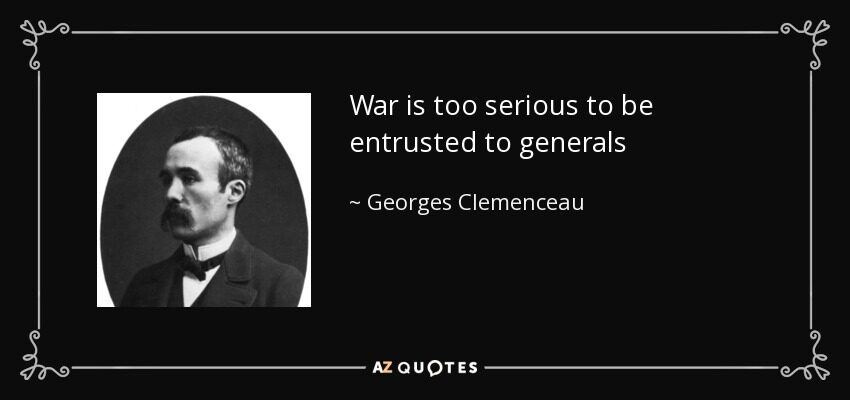
French Prime Minister Georges Clemenceau famously remarked that war is too important to be left to the generals. Mexico’s recent experience suggests a similar lesson: politics can become too important to be left entirely to politicians.
For former President Andrés Manuel López Obrador, politics was the organizing principle of everything. Nothing existed outside the political arena—not even organized crime.

For most of the twentieth century, Mexico maintained political stability through an extensive system of patronage and clientelism. It was neither democratic nor particularly participatory, but it was remarkably effective at mobilizing voters, resolving local conflicts, and preserving social order. Its purpose was straightforward: political control.

As political scientist Fernando Escalante has argued, Mexico’s democratic transition dismantled that system without replacing it. When the Institutional Revolutionary Party (PRI) lost the presidency in 2000, the old machinery of political control disappeared, but no new institutions emerged to fill the vacuum. A technocratic state replaced the clientelist one, yet it largely failed to reach the country’s poorest communities or address the problems that defined daily life there.
At the same time, globalization and technological change transformed Mexico’s economy. Integration into global manufacturing and trade created enormous opportunities for some regions while leaving others behind. The result was, in effect, two Mexicos: one increasingly connected to international markets, the other trapped in informality, violence, and economic stagnation.

No administration before 2018 developed an effective strategy to bridge that divide. Growing inequality of opportunity and deepening social frustration created fertile ground for politicians who claimed to represent those left behind by globalization.

López Obrador, whose political instincts were forged during the PRI’s heyday, revived many of the mechanisms that had once sustained the old regime. Through an expanded system of social transfers and political mobilization, he rebuilt a nationwide network of loyal constituencies. The objective, much as before, was political stability through political control.

Within that framework, everyone became a political actor.

That included organized crime.

This does not mean López Obrador was himself aligned with drug cartels. Rather, he appears to have viewed criminal organizations as just another set of actors with whom the government could negotiate, manage, or neutralize. His belief that political accommodation could tame conflict prevented him from recognizing a fundamental reality: organized crime is not simply another interest group. It is an anti-State enterprise with objectives fundamentally incompatible with the authority of the State.

Once that distinction disappeared, the consequences multiplied.
Treating criminal organizations as legitimate political interlocutors lowered barriers throughout the political system. Their growing presence within Morena’s electoral machinery, the election of politicians allegedly linked to criminal organizations, and the normalization of relationships that would previously have been politically unacceptable all became easier to explain. Activities that once carried political stigma increasingly came to be tolerated—or ignored—as part of ordinary political bargaining.
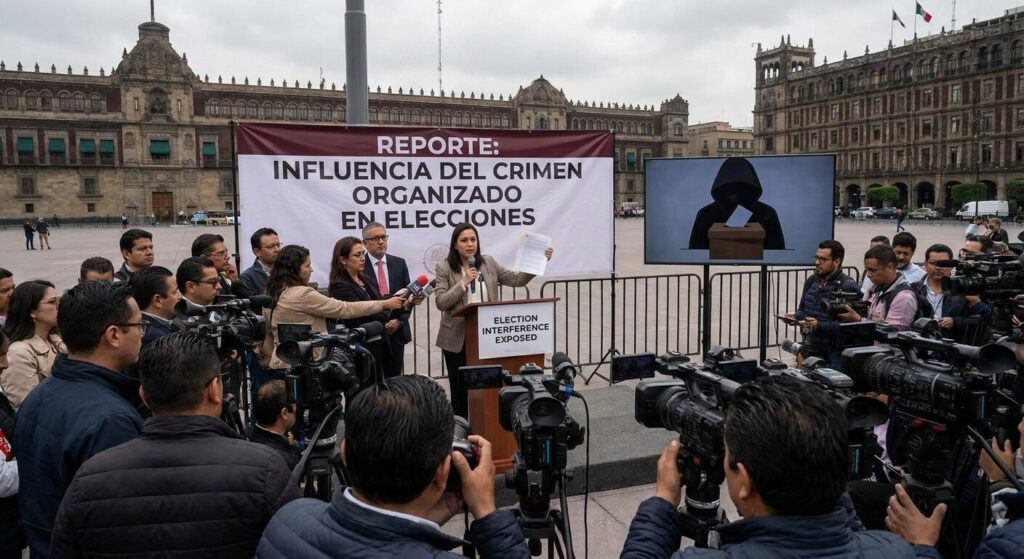
The same logic spread beyond politics. If organized crime was no longer viewed as an existential threat to the State, cooperation with criminal organizations became easier to rationalize. Politicians, public officials, businesspeople, and others found fewer incentives to resist collaboration and greater opportunities for mutual enrichment. Some of the criminal investigations now unfolding may ultimately reflect precisely this dynamic.

Organized crime, unlike the government, fully understood the opportunity before it.
The clearest example of this was the midterm elections of 2021, when organized crime established a corridor from Colima to the northern border, all under its control, with its candidates, including many of the Sinaloa politicians recently indicted by the DOJ.
Rather than limiting itself to drug trafficking, organized crime expanded aggressively into nearly every profitable corner of the economy: extortion, kidnapping, human trafficking, prostitution, fuel theft, and even control over the production and export of agricultural products such as avocados and limes. Criminal organizations increasingly inserted themselves into ordinary economic life.
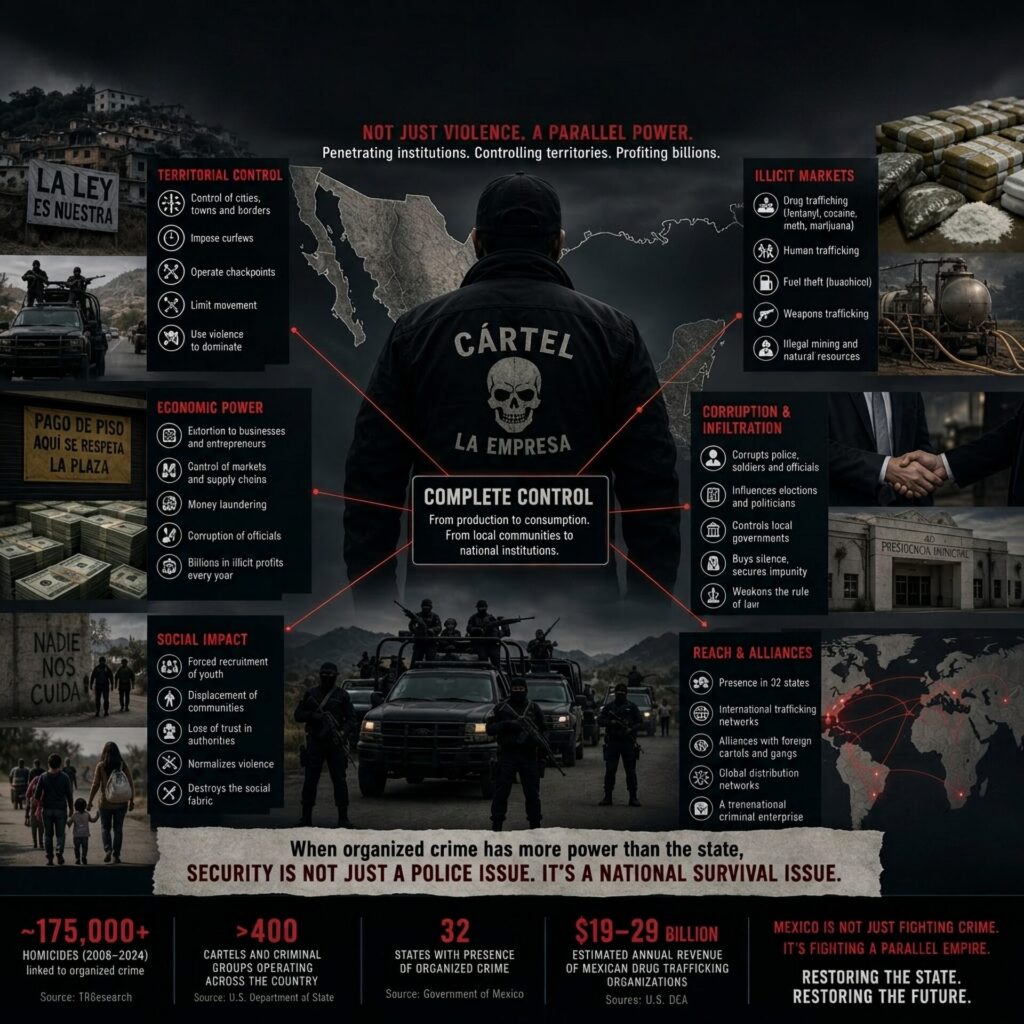
The result has been the gradual emergence of what can only be described as narco-politics. Politicians, bureaucrats, business leaders, politicians’ relatives, and even members of Mexico’s armed forces have, in numerous documented cases, become entangled with organizations whose long-term interests directly undermine the Mexican State.
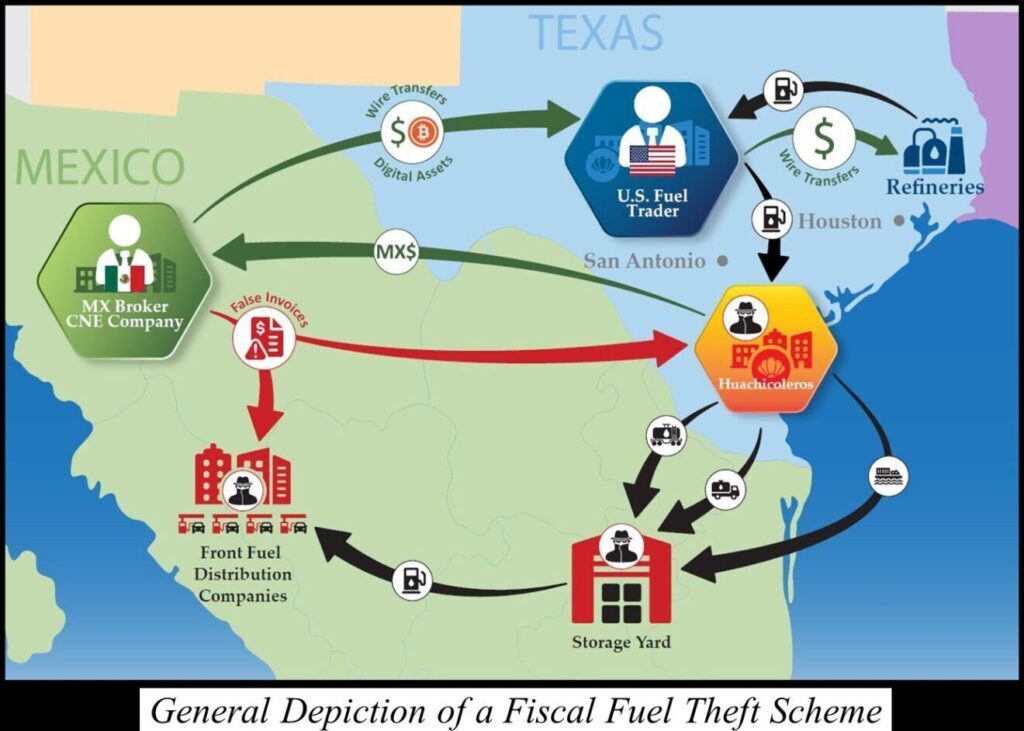
A profound conceptual error produced a profound political consequence. By treating organized crime as another participant in the political process rather than as an enemy of the constitutional order, the government allowed criminal organizations to establish themselves inside institutions that the State no longer possesses the capacity to control fully.

That is now Mexico’s central security challenge.
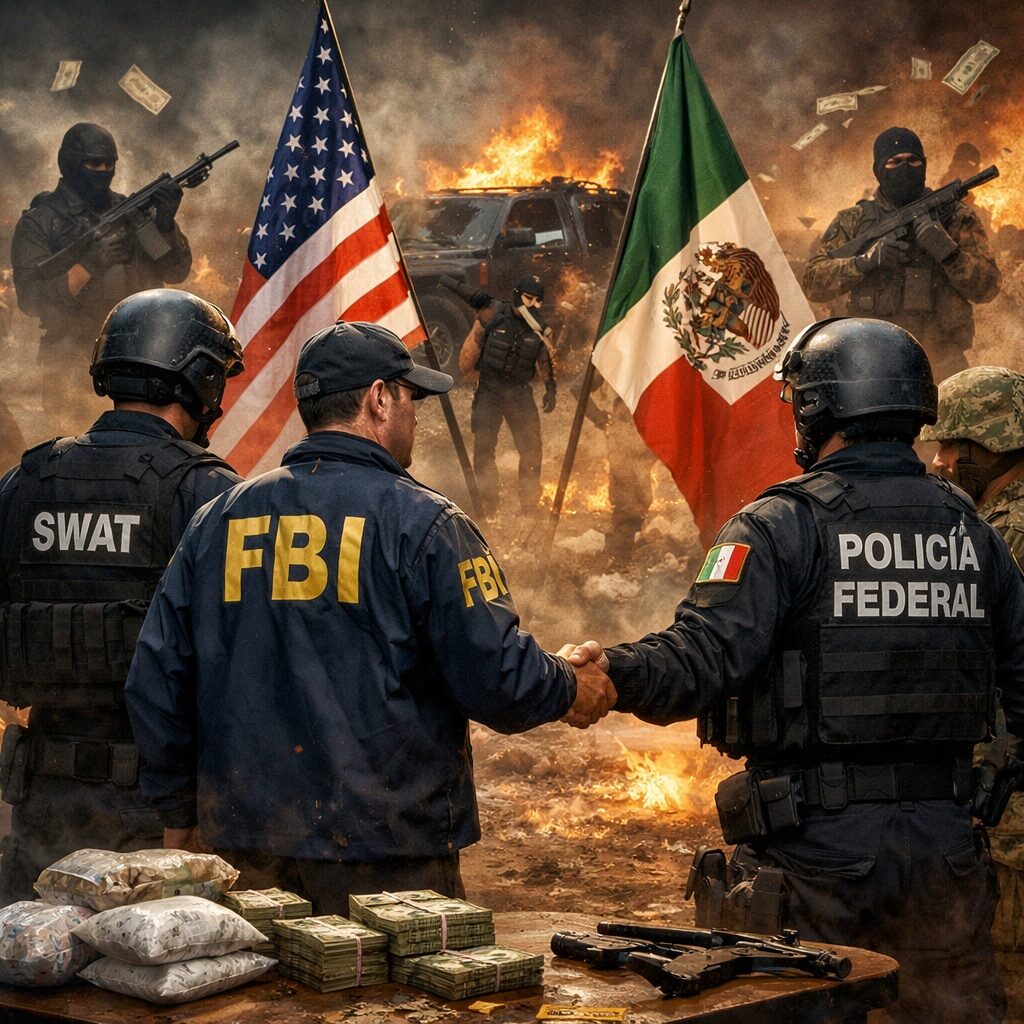
For that reason, confrontation with Washington is unlikely to strengthen Mexico’s position. Organized crime threatens both countries. Rather than turning bilateral relations into another political battleground, Mexico and the United States should be looking for ways to confront their common enemy together.
@lrubiof
The original Spanish version of this article can be found at
Further Reading: