
Madness in Power: Consequences for Global Stability.

The content critiques the rise of reckless leadership, particularly focusing on Trump’s actions as detrimental to global stability. It contrasts the concept of madness, which can inspire short-term success, with the destructiveness of past tyrants. The author warns that unchecked madness in power threatens democracy and societal well-being.


The Collapse of International Diplomacy in the Trump Era.

Since the Congress of Vienna in 1815, the need for institutional mechanisms to prevent chaos has been clear. The U.S. played a pivotal role in fostering global stability post-World War II, emphasizing peace over force. However, under Trump, this commitment has eroded, leading to a dangerous precedence of coercion over diplomacy.

The Five Years of Sepgra.

In June 2020, Sepgra emerged as a virtual platform during the pandemic, providing insights on global economic and political issues. Over five years, it published 1978 articles covering diverse topics, navigating challenges like economic turmoil, political polarization, and the impacts of Covid-19, illustrating adaptability while aiming for quality, unbiased content.

Youth Rebellion in Mexico: The Influence of ‘One Piece’.

The youth rebellion, symbolized by Monkey D. Luffy from “One Piece,” reflects a surge of activism in Asia and beyond, particularly within Generation Z. Government attempts to co-opt these movements in Mexico demonstrate a fear of losing control, as genuine student uprisings challenge the status quo amid societal discontent and violence.

The Arab Spring 15 Years Later.

Mohamed Bouazizi, a young Tunisian fruit and vegetable vendor, set himself on fire in public after police confiscated his merchandise and slapped him in front of onlookers. With this extreme gesture of protest and helplessness in the face of police abuse and living conditions under a corrupt regime, his charred body sparked revolt across North Africa, and the world enthusiastically welcomed what we came to know as the Arab Spring.

From Yalta to Alaska.

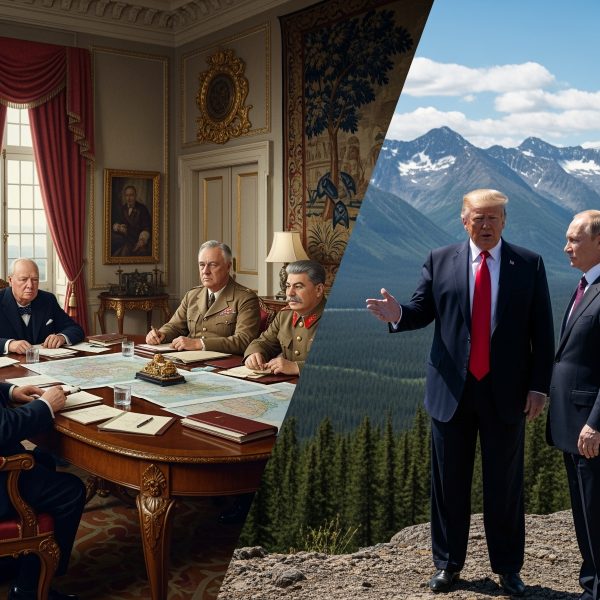
Eighty years after the Yalta Conference, where major powers divided post-World War II territories, the recent Trump-Putin summit in Alaska starkly contrasts in purpose and outcome. Unlike Yalta, which established frameworks for future peace, the Alaska meeting failed to address the Ukraine conflict. Their approaches and lacks of vision highlight contemporary geopolitical challenges.

Shares