U.S. National Security Strategy.
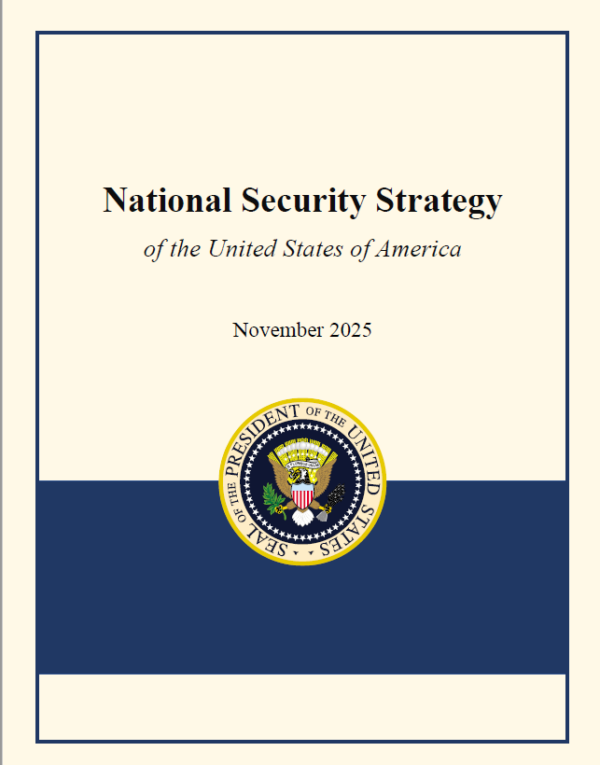
This official report of the United States Government outlines the priorities of the Trump administration concerning foreign policy, revealing a shift in its geopolitical strategy and values.
The discourse examines the theme of loyalty versus faithfulness in governance, highlighting scandals involving prominent figures like King Charles III and various Latin American presidents. It emphasizes the necessity of judicial integrity amidst political corruption, especially in Mexico, where a decline in trust is noted due to governmental actions undermining rule of law.
September 1, 1939, went down in history as the official beginning of World War II. On that day, Germany, having had its fill of Europe under the condescension, frivolity, and incompetence of democratic governments, finally broke through the border with Poland and occupied it.
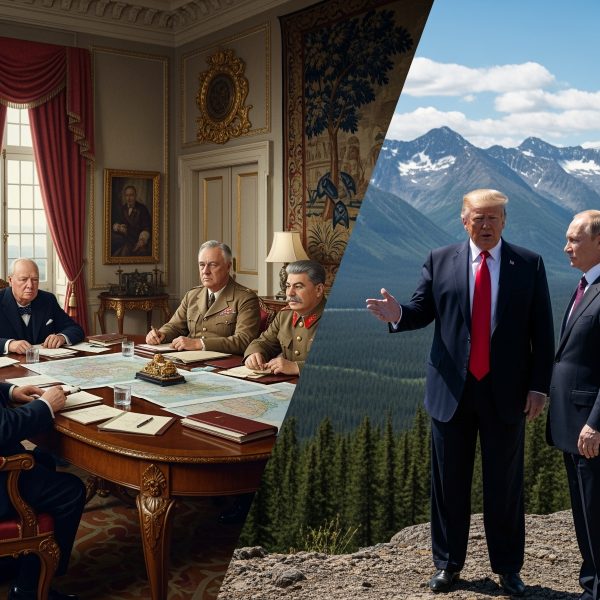
Eighty years after the Yalta Conference, where major powers divided post-World War II territories, the recent Trump-Putin summit in Alaska starkly contrasts in purpose and outcome. Unlike Yalta, which established frameworks for future peace, the Alaska meeting failed to address the Ukraine conflict. Their approaches and lacks of vision highlight contemporary geopolitical challenges.
President Sheinbaum’s response to Ovidio Guzmán’s plea deal reveals her anxiety about potential revelations linking Mexican officials to drug trafficking. Amidst concerns over complicity within her party, she echoes López Obrador’s demand for evidence from U.S. authorities, exposing her political vulnerability and the pervasive double standards in combating drug-related corruption.
The contemporary world faces conflicts rooted in ideological and resource competition following the Cold War’s end. Different capitalistic models, namely liberal and state-controlled, contribute to international tensions. Future wars may erupt over scarce resources unless effective global governance, equitable rules, and respect for sovereignty are established to prevent hegemonic imposition.
Trump’s current presidency diverges sharply from his first, as he seeks to dismantle previous policies and reform the federal workforce to align with his conservative ideology. His administration aims for global dominance through alliances with hegemonic powers, reshaping international relations to favor a select few while sidelining multilateral organizations. Countries now interact under a new imperial framework.
The United States pressures Mexico over terrorism due to national security concerns, viewing drug cartels as threats. The proposals for annexing Greenland and Canada reflect security strategies against Russian and Chinese advances. Economic pressures on Mexico include potential sanctions on companies linked to drug trafficking and remittances, impacting significant economic ties.
The content discusses the global crises stemming from institutional failures post-World War II, comparing the current U.S. situation to historical empires. It highlights the rise of populism linked to disillusionment with democracy, the shift in global power towards China, and the need for new sovereignty concepts in North America. The piece critiques failed governance in Europe and addresses geopolitical dynamics in the Middle East and Russia.