How Can the U.S. Intervention Be Avoided? Sheinbaum and the U.S. Intervention Debate.

Foreign intervention in Mexico is increasingly debated, with President Sheinbaum blaming the opposition for potential destabilization. Critics argue that her administration’s authoritarianism and ties to drug trafficking create an unstable environment, risking U.S. intervention. The opposition, advocating for reform and transparency, claims to be more loyal to Mexico than the current government.

Morgan Freeman On Trump’s Threat To Mexico.

Morgan Freeman critiques Trump’s 2026 threat to use military force against Mexican cartels, recalling the failure of Plan Colombia despite significant investment. He argues that military action has consistently failed to diminish cartel power in various countries, suggesting that Trump’s approach will likely repeat past mistakes with unproductive escalation.

Breaking the Silence: Our Role in Democracy.

Modern democracy is hindered by indifference, as many view politics as the realm of others, leading to a harmful mindset that absolves personal responsibility. The silence and disengagement of citizens allow anti-democratic narratives to flourish. Engaging politically is essential; passivity invites those with less scruple to fill the power vacuum.

Madness in Power: Consequences for Global Stability.

The content critiques the rise of reckless leadership, particularly focusing on Trump’s actions as detrimental to global stability. It contrasts the concept of madness, which can inspire short-term success, with the destructiveness of past tyrants. The author warns that unchecked madness in power threatens democracy and societal well-being.

New World Order: Power, Threats, and Alliances.

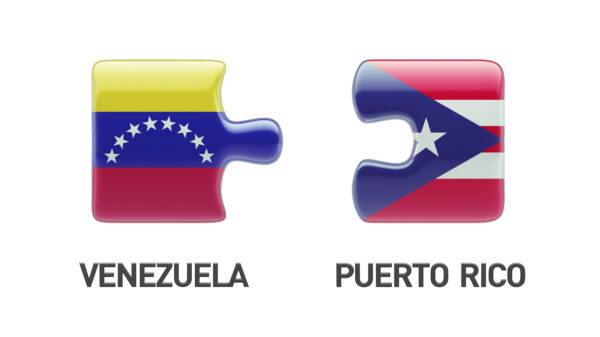
The article discusses the escalating geopolitical tensions driven by US interventions, particularly in Venezuela, which are reminiscent of Russia’s actions in Ukraine. It critiques Mexico’s lack of coherent foreign and national security policies under its current leadership, highlighting the risks posed by external threats and internal inconsistencies.

The Collapse of International Diplomacy in the Trump Era.

Since the Congress of Vienna in 1815, the need for institutional mechanisms to prevent chaos has been clear. The U.S. played a pivotal role in fostering global stability post-World War II, emphasizing peace over force. However, under Trump, this commitment has eroded, leading to a dangerous precedence of coercion over diplomacy.

Reading The Signals On Mexico And Cuba.

Mexico is in the eye of the storm. To navigate the new political conditions emerging on the national horizon, it is essential to adopt new paradigms and methods of analysis. Traditional arguments no longer work, given the new geopolitical configurations of the world. It is time to rethink ourselves. Venezuela’s abrupt transformation—from a lackey state of China, Russia, and Iran to a protectorate of the United States—is not simply an old-fashioned imperial phenomenon. It is a change that transforms all relations among the nation-states of the Caribbean Basin.

Iran’s Economic Crisis Fuels Rebellion Against Theocratic Regime.

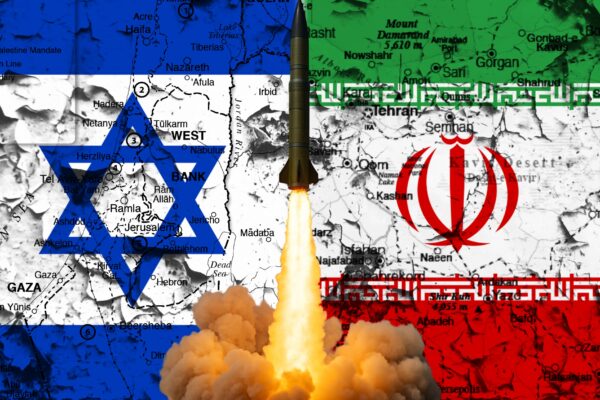
In 2025, María Corina Machado received the Nobel Peace Prize for defending Venezuelan democracy. In 2023, Narges Mohammadi was awarded for her human rights activism in Iran, despite imprisonment. Current protests in Iran, fueled by economic crises and lost support from merchants, challenge the regime’s legitimacy, with calls for significant systemic change.

After Maduro’s Capture, the Shockwaves Reach Mexico.

U.S. pressure on Mexico may compel significant decisions regarding organized crime and Cuba following Nicolás Maduro’s capture. The evolving political landscape threatens Mexico’s stability, as internal dynamics and the potential influence of Cuban intelligence could impact regional security. Mexico’s pragmatic governance faces increased scrutiny from the U.S. amidst rising crime challenges.

Sir Niall Ferguson: Trump Was Right To Overthrow Maduro.

Historian Niall Ferguson discusses President Trump’s decision to oust Venezuelan President Nicolás Maduro, labeling it as overdue. He analyzes U.S. intervention history in Latin America, introduces the “Trump Corollary,” and evaluates the potential risks of regime change while considering global consequences involving China, Iran, and regional power dynamics.

Shares