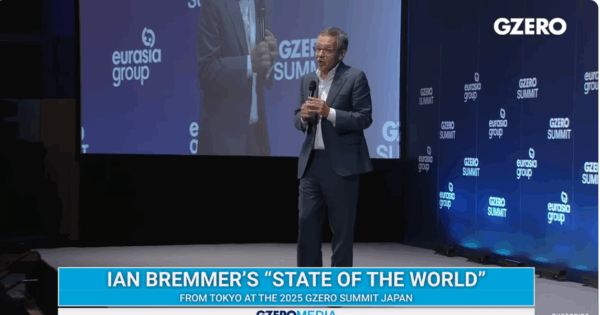
Must-Watch Video: State of the World 2025

Ian Bremmer’s annual State of the World address on October 21, 2025, in Tokyo outlined key geopolitical developments, including growing global uncertainty due to the unpredictable U.S., evolving U.S.-China relations, and strategies adopted by U.S. allies. The speech was part of the 2025 GZERO Summit hosted by Eurasia Group.

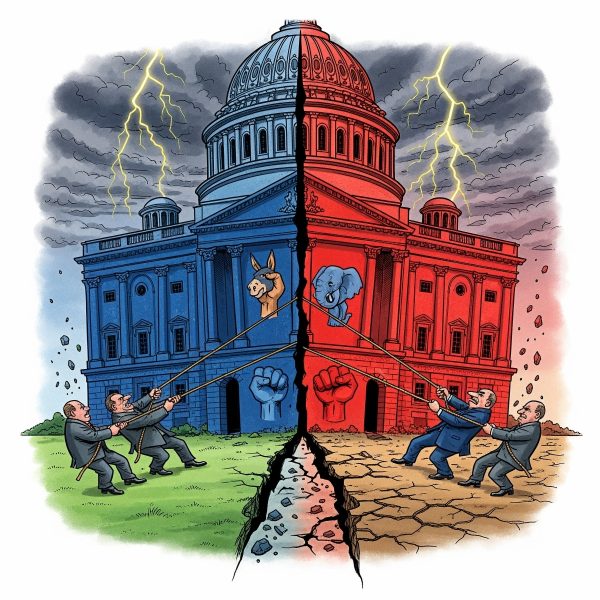
Luis Maizel’s Monthly Letter: A Paralized Government in a Polarized Country.

Today, we woke up to a government shutdown and without resources. United States law establishes a maximum debt limit that only Congress can increase. The Republicans’ budget proposal was rejected by the Democrats, who demanded a series of concessions in order to vote in favor of temporarily raising the debt ceiling.

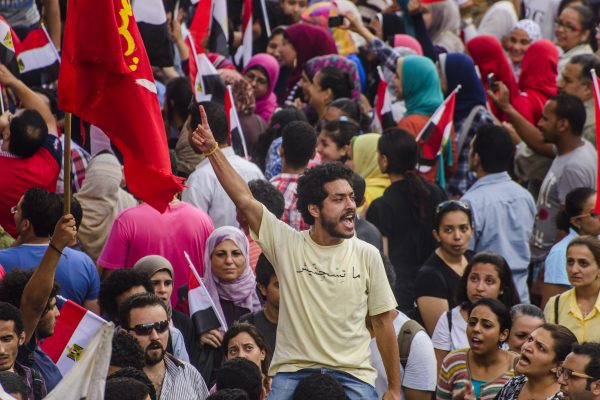
The Arab Spring 15 Years Later.

Mohamed Bouazizi, a young Tunisian fruit and vegetable vendor, set himself on fire in public after police confiscated his merchandise and slapped him in front of onlookers. With this extreme gesture of protest and helplessness in the face of police abuse and living conditions under a corrupt regime, his charred body sparked revolt across North Africa, and the world enthusiastically welcomed what we came to know as the Arab Spring.

PEMEX: Opportunities and Challenges in Mexico’s Oil Sector

The content discusses the fictional town Macondo as a metaphor for the challenges faced by leftist governments, particularly in relation to Mexico’s oil industry and PEMEX. It highlights the diminishing effectiveness of PEMEX, urging a reassessment of its operations. The author advocates for reform rather than perpetuating inefficiencies tied to political interests.

Gold Mid-Year Outlook 2025.

Gold prices surged 26% in the first half of 2025 due to a weaker US dollar and increased investment demand amid economic uncertainty. Predictions indicate potential gold price stability with a slight increase, while deteriorating conditions could drive prices 10%-15% higher. Conversely, conflict resolution could lead to a 12%-17% drop in gains.

The Axis of Power is Cracking.

The content reflects on the historical and current significance of Athens as a cradle of knowledge and democracy, connecting it to contemporary global power shifts, particularly toward Asia. It discusses China’s economic rise, the decline of European influence, and questions the implications for human rights and individual sovereignty in this evolving landscape.

Luis Maizel’s Monthly Letter: June, A Momentous Month.

Israel’s attack on Iran, backed by the U.S., aims to disrupt nuclear bomb development, potentially altering Middle Eastern dynamics. The U.S. Supreme Court strengthened presidential power over national policies. Economic trends show U.S. manufacturing slowing, while job creation declines. Mexico’s inflation remains high, and geopolitical shifts impact global markets and trade relations.

Can Israel Survive Amid Global Tensions?

Israel, a small nation with a tumultuous history of suffering and persecution, is at a critical juncture marked by the October 7, 2023, attacks. This has reignited debates over its moral stance and nuclear capabilities amid complex geopolitics involving major global powers. The survival of Israel now poses existential dilemmas with potentially catastrophic implications.

The Rise of Authoritarian Capitalism: A New Global Landscape.

The collapse of the Soviet Union ended the Cold War and led to U.S. unipolarity promoting capitalism linked with liberal democracy. However, several nations embraced capitalism under authoritarian regimes, challenging the idea that democracy is essential for capitalism. The rise of countries like China and Russia introduces a new era of conflicting capitalist models.

From Cooperation to Thuggery

The article discusses the potential collapse of the post-World War II international structure due to the rise of Trumpism. It highlights a crisis in democracy, the erosion of ethical standards, and questions the effectiveness of international cooperation, particularly in supporting developing nations. The implications for global governance and democracy are dire if current trends continue.

Shares