
Luis Maizel’s Monthly Letter: The United States Is Becoming Increasingly Polarized.

The political climate in the U.S. is increasingly polarized, with extreme leftist and rightist ideologies dominating. Economic indicators show stability, despite rising layoffs and inflation. In Mexico, business sentiment is low amid government unrest. Globally, economic growth varies, with advancements in AI and challenges in countries like China and Japan.

Trump’s AI Satire: A New Era of Political Discourse

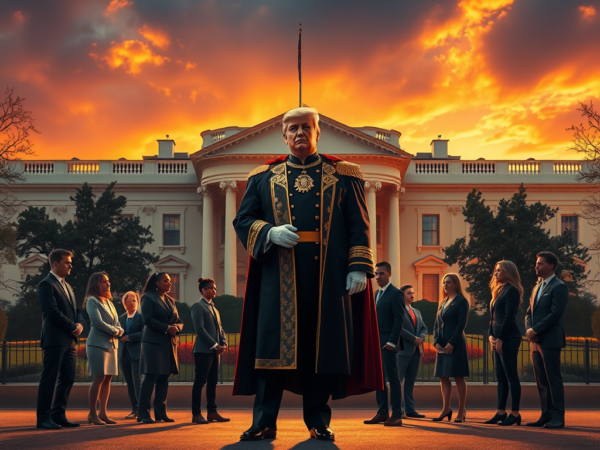
The content discusses Donald Trump’s use of humor and artificial intelligence in politics, highlighting his crude jokes and controversial statements as a means to garner attention in the viral social media era. It contrasts traditional notions of charisma and critiques the blurred lines between reality and fiction in political communication today.

The Five Years of Sepgra.

In June 2020, Sepgra emerged as a virtual platform during the pandemic, providing insights on global economic and political issues. Over five years, it published 1978 articles covering diverse topics, navigating challenges like economic turmoil, political polarization, and the impacts of Covid-19, illustrating adaptability while aiming for quality, unbiased content.

The Global Organized Crime Index 2025.

The global criminal landscape is increasingly adaptive and complex, shaped by socio-economic shifts and technological advancements. The 2025 Index highlights critical changes in drug markets, the rise of non-violent crimes, and growing foreign and private sector involvement. It indicates an urgent need for new resilience strategies to counter evolving organized crime.

Luis Maizel’s Monthly Letter: What Have We Done To Deserve This Government?

Societal discontent is rising globally, with a notable survey indicating no respondents feel better off than a decade ago. In the U.S., a government shutdown disrupts services, and political conflicts hinder citizens’ needs. Various economic conditions unfold worldwide, with mixed reports on growth, investment, and public confidence amid rising debt and challenges in multiple countries.

Edelman Global Trust Barometer 2025.

The content includes various articles and reports focusing on global trust, economic outlooks, and market analysis for 2025. Topics range from JP Morgan’s initiatives, gold market trends, geopolitical impacts of tariffs, and assessments of government leadership. These resources aim to provide insights into critical industries and economic dynamics.

U.S. National Security: Mexico’s Strategic Role.

The United States views Mexico as a crucial player in its geopolitical strategies concerning Latin America, particularly in relation to Venezuela and Colombia. Recent actions suggest a testing ground for influence in Mexico, amid concerns about its alliance with drug traffickers and opposition to U.S. policies. Mexico’s foreign policy risks increasing regional tensions.

Must-Watch Video: State of the World 2025

Ian Bremmer’s annual State of the World address on October 21, 2025, in Tokyo outlined key geopolitical developments, including growing global uncertainty due to the unpredictable U.S., evolving U.S.-China relations, and strategies adopted by U.S. allies. The speech was part of the 2025 GZERO Summit hosted by Eurasia Group.

The Era of Force: Politics, Power, and Profit.

The text discusses the significant political and social shifts transforming the modern world, emphasizing the replacement of legality and individual rights with profit-driven power dynamics devoid of ethics. It critiques current leaders, notably Trump, for exploiting conflicts and diminishing democratic values, underscoring a new era governed by force rather than law.

The Fascination With Disaster.

In a landscape filled with immediate crises, such as pandemics and wars, long-term threats like climate change struggle for attention. Despite undeniable evidence and urgent warnings, human fascination with catastrophe persists, reflecting a desire for last chances. Cultural narratives can amplify this paradox, revealing deeper psychological connections to destruction and survival.

Shares