
My Readings in 2025.

In times of upheaval, many books emerge addressing significant geopolitical and historical themes. Noteworthy titles include Hal Brands’ exploration of Eurasian geopolitics and Claudio Lomnitz’s analysis of Mexico’s dual realities. Robert Kaplan’s pessimistic insights mirror the Weimar Republic, highlighting the fragility of democracy, while Timothy W. Ryback details Hitler’s rise without popular support.

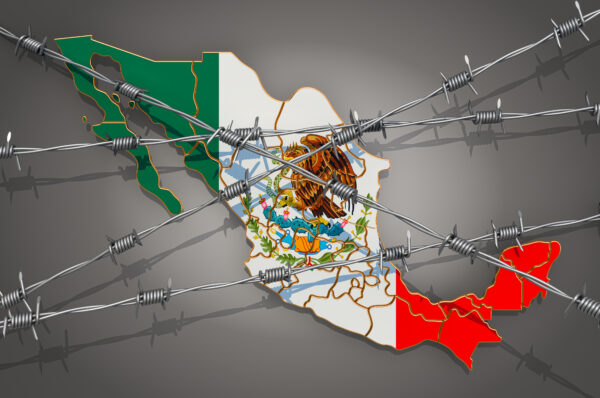
Its Name Is Terrorism.

Sometimes societies become so used to certain outbreaks of violence that they lose sight of what they really represent. We name the events lightly, soften concepts, or reduce them to convenient explanations. But in doing so, we also dilute our ability to understand the true scope of what we are facing. When a government refuses to call terrorism what—by definition—is terrorism, it ends up defenseless against those who have decided to use fear as a tool of power.

Fantasies of the Past To Justify the Present.

Any analysis of López Obrador’s book “Grandeza” (Greatness) must start from its essentially political and ideological nature, rather than as an academic historical review. It is a text written based on assumptions about the past to explain and defend his vision of the present. López Obrador’s book is a gem for studying how a man imbued with Judeo-Christian values seeks to twist the human experience to fit his very particular vision of the universe and the humanity that inhabits it.

Goodbye Socioeconomic Mobility, Goodbye.

Jesús Reyes Heroles, born in 1921, whose home had no books, left Tuxpan to find a secondary school. He went to Tampico, where he found one. A good student and obsessive reader, he had to migrate again to San Luis Potosí in search of a high school. Later, in Mexico city, he entered law school, living in a horrible place. Determined to move forward, he obtained a scholarship in Buenos Aires and embarked on his postgraduate studies. In the past, the possibility of broadening one’s life spectrum through education and economic growth existed. No more.

On How Mexico’s Government Deceives The World.

Mexico’s President Claudia Sheinbaum’s absence from key international forums has drawn criticism, particularly regarding drug trafficking and violence. This lack of engagement coincides with a demoralized diplomatic corps and a government hesitant to openly address controversial issues. Mexico’s foreign policy operates in secrecy, reflecting a disconnect with its economic partners and democratic values.

The Five Years of Sepgra.

In June 2020, Sepgra emerged as a virtual platform during the pandemic, providing insights on global economic and political issues. Over five years, it published 1978 articles covering diverse topics, navigating challenges like economic turmoil, political polarization, and the impacts of Covid-19, illustrating adaptability while aiming for quality, unbiased content.

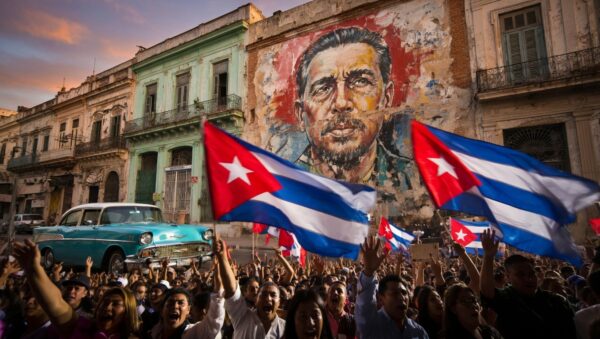
Dictatorships Seem Eternal.

In four days, it will be fifty years since the death of a dictator. Francisco Franco died between midnight on November 19 and the early hours of November 20, 1975. His death was recorded, made up, dressed up, and solemnly announced to the Spanish people. The message was read, with tears in his eyes, by the president of the government appointed by Franco himself: “Spaniards… Franco is dead.”

The Economics of Attention.

The essay discusses the evolution of attention economy from the invention of the bikini by Louis Réard in 1946 to the digital revolution. Yanis Varoufakis argues that society has shifted from tangible goods to a system where attention is commodified, creating techno-feudalism. Users, now products, face a challenge in reclaiming focus amidst constant distraction.

The Global Organized Crime Index 2025.

The global criminal landscape is increasingly adaptive and complex, shaped by socio-economic shifts and technological advancements. The 2025 Index highlights critical changes in drug markets, the rise of non-violent crimes, and growing foreign and private sector involvement. It indicates an urgent need for new resilience strategies to counter evolving organized crime.

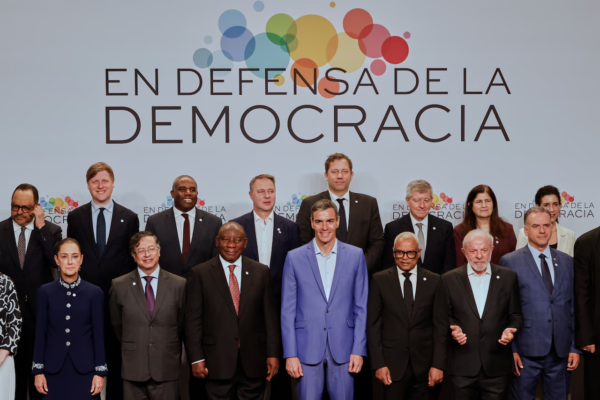
Milei’s Victory: A Shift in Argentina’s Political Landscape.

Javier Milei’s recent electoral victories in Argentina reflect public discontent with Kirchnerism’s governance, characterized by corruption and economic ruin. His administration has reduced inflation and poverty while navigating political challenges. With newfound congressional support, Milei aims to implement economic reforms and stabilize governance, challenging expectations and potential outcomes.

Shares