
U.S. National Security Strategy.
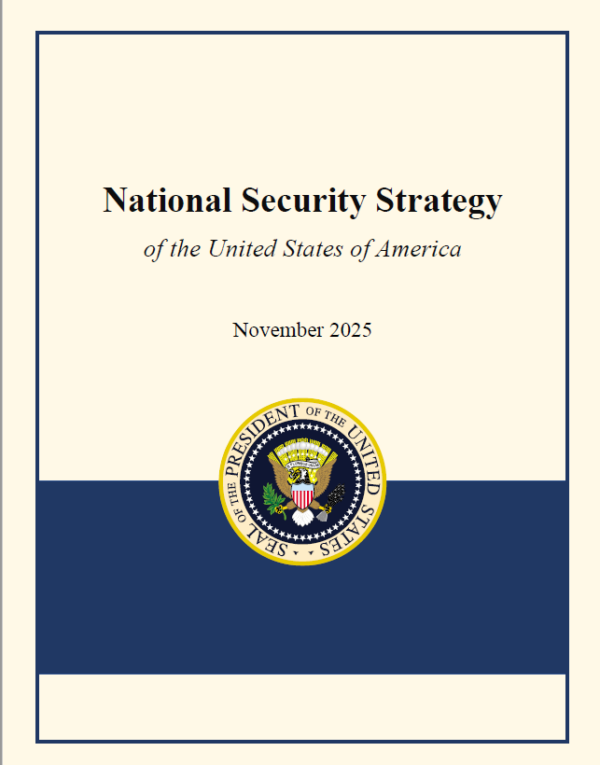
This official report of the United States Government outlines the priorities of the Trump administration concerning foreign policy, revealing a shift in its geopolitical strategy and values.
ith less than four weeks to go before we bid farewell to 2025—amidst the fury, the din, the missiles, and the drones—it is inevitable that we pause and take stock of how, in our political and social sphere, we will close out the year. Now that the first quarter of the century is over, we understand that we are not living in exceptional circumstances. Each period leading up to the world wars was unique in its time, yet they all shared the same air of menace.
Professor John Mearsheimer discusses how sanctions intended to weaken Russia have inadvertently fostered a multipolar world challenging U.S. hegemony. Analyzing Jeffrey Sachs’ insights, Mearsheimer highlights Russia’s economic strategies, BRICS expansion, and the decline of dollar dominance, emphasizing the need for the West to adapt or face potential chaos.
Mexico’s President Claudia Sheinbaum’s absence from key international forums has drawn criticism, particularly regarding drug trafficking and violence. This lack of engagement coincides with a demoralized diplomatic corps and a government hesitant to openly address controversial issues. Mexico’s foreign policy operates in secrecy, reflecting a disconnect with its economic partners and democratic values.
In June 2020, Sepgra emerged as a virtual platform during the pandemic, providing insights on global economic and political issues. Over five years, it published 1978 articles covering diverse topics, navigating challenges like economic turmoil, political polarization, and the impacts of Covid-19, illustrating adaptability while aiming for quality, unbiased content.
The United States views Mexico as a crucial player in its geopolitical strategies concerning Latin America, particularly in relation to Venezuela and Colombia. Recent actions suggest a testing ground for influence in Mexico, amid concerns about its alliance with drug traffickers and opposition to U.S. policies. Mexico’s foreign policy risks increasing regional tensions.
Ian Bremmer’s annual State of the World address on October 21, 2025, in Tokyo outlined key geopolitical developments, including growing global uncertainty due to the unpredictable U.S., evolving U.S.-China relations, and strategies adopted by U.S. allies. The speech was part of the 2025 GZERO Summit hosted by Eurasia Group.
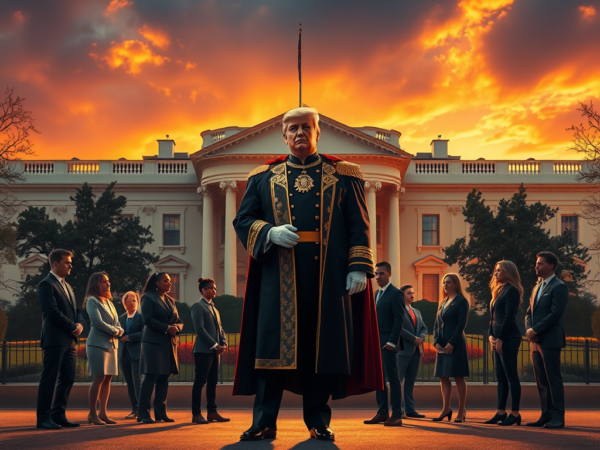
The text discusses the significant political and social shifts transforming the modern world, emphasizing the replacement of legality and individual rights with profit-driven power dynamics devoid of ethics. It critiques current leaders, notably Trump, for exploiting conflicts and diminishing democratic values, underscoring a new era governed by force rather than law.
In a landscape filled with immediate crises, such as pandemics and wars, long-term threats like climate change struggle for attention. Despite undeniable evidence and urgent warnings, human fascination with catastrophe persists, reflecting a desire for last chances. Cultural narratives can amplify this paradox, revealing deeper psychological connections to destruction and survival.
The text emphasizes the unpredictability of current global circumstances, highlighting the challenges faced by countries like Mexico, France, Italy, and Spain. It discusses economic realities, social tensions, and the impact of immigration and crime. The need for effective leadership and cooperation for stability and justice is stressed, particularly concerning tariffs and accountability.