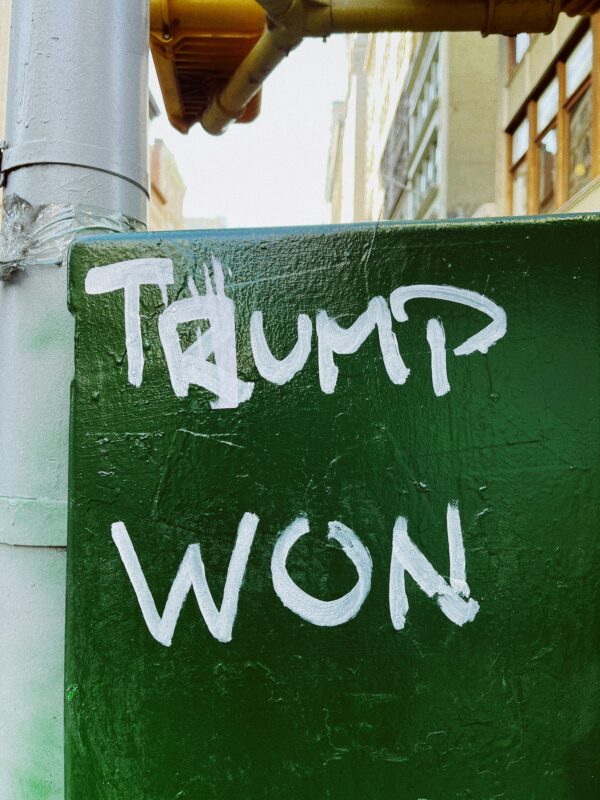
Trump’s Unfinished Victories.

As the hours pass, the war waged by Israel and the United States against Iran threatens to become a protracted conflict, much like the war in Ukraine. The mix of politics and war is proverbial: we know who starts the war and when, but we never know when it will end or under what conditions.

The Revolution Devours Its Own.

Luis Rubio discusses the challenges faced by Mexico’s ruling movement, Morena, which mirrors historical cycles of revolutions leading to authoritarianism. As disillusionment grows, internal fragmentation, and a demand for accountability rise. The government struggles with past failures while grappling with the need for sustainable social commitments amid economic inconsistencies.

Mexico’s Electoral Reform and the Business Community.

President Sheinbaum’s electoral reform threatens to undermine democracy in Mexico, potentially increasing political polarization and violence while diminishing the country’s international image. The reforms signal a disregard for the rule of law, fostering economic uncertainty and deterring private investment. This adverse environment could hinder growth and deepen the societal divide.

The Worst of the War.

What some in Washington once imagined as a possible political evolution ended up becoming the establishment of a radical clerical power that redefined the strategic balance in the Middle East for decades. Since then, the world has paid—and will probably continue to pay for a long time to come—the consequences of that historic turn of events. The worst thing about war is not what has already happened, but what may come in the form of revenge, score-settling, and miscalculation.

The Moral Superiority of Trump and Claudia Sheinbaum Explored.

The content critiques the contradictory behaviors of leaders Donald Trump and Claudia Sheinbaum, highlighting their moral superiority perceptions that justify authoritarian actions. Trump’s peace campaign has led to aggressive foreign policies, while Sheinbaum positions herself as a transformative force in Mexico, both forgetting their initial promises in pursuit of power.

The Delcy Rodríguez Model for Political Transition.

The Trump administration’s plan for Venezuela involves Vice President Delcy Rodríguez governing until new elections can be conducted, aiming to prevent chaos after Nicolás Maduro’s removal. The strategy hinges on U.S. control over oil revenues and avoiding military intervention, paralleling potential transitional models in Cuba and Iran.

AMLO: Priest of the São Paulo Forum.

The post critiques Andrés Manuel López Obrador (AMLO), comparing his governance style to Evo Morales, emphasizing corruption within the Mexican political system. It outlines the adherence to the São Paulo Forum’s principles, highlighting manipulations of the judiciary and military. Despite initial success, the author argues this approach is ultimately doomed to fail, leaving Mexico isolated.

The Decline Of Leftist Regimes In Latin America.

The Latin American left is facing decline, with countries like Chile and Argentina rejecting leftist governance. The isolation of Cuba’s regime signals a potential overthrow, exacerbated by the lack of solidarity from Latin American nations. Mexico’s hesitant support reflects broader struggles, as authoritarian practices threaten regional legitimacy.

The Future of International Cooperation Post-Trump.

Following Nicolás Maduro’s arrest, international conflicts have risen, signaling the potential end of the post-WWII cooperation framework. The Trump administration’s withdrawal from numerous organizations raises concerns about future global cooperation and institutional credibility. Critics highlight inefficiencies and corruption in organizations like USAID, emphasizing a need for reevaluation of international assistance approaches.

The New Free Associated State of Venezuela.

The January 3 event signifies a shift in global warfare, emphasizing non-traditional methods of control over direct military intervention. The U.S. approach to Venezuela illustrates this “invasion without invaders” model, where geopolitical influence is exerted through advanced technology and manipulation of financial flows, rather than conventional occupation or conflict.

Shares