

Emilio Rabasa Gamboa
Xi Jinping, President of the People’s Republic of China, welcomed Donald Trump to Beijing last week with a masterclass in diplomacy meticulously designed for his guest: a blend of military pomp (an impeccably ordered honor guard as they walked the red carpet and before entering the Great Hall) and a subtle reminder that he was visiting an emerging yet millennia-old power (a tour of the park with centuries-old trees that was not merely an ecological excursion; in Chinese tradition, the ancient tree symbolizes historical continuity, longevity, and civilizational patience) and a history lesson drawn from Thucydides, author of The Peloponnesian War (between Sparta and Athens), the two powers of ancient Greece.
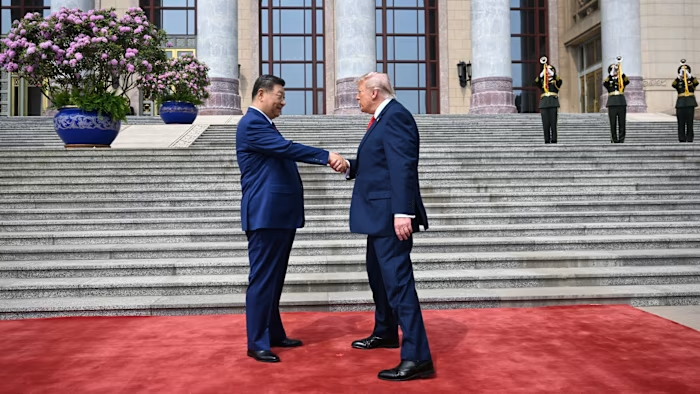
The combination of these elements served as a stern warning to his powerful host regarding what that vast Asian nation represents today. Rather than limiting himself to an agenda on Taiwan, modern technology including AI, tariffs, the trade balance, Chinese commercial expansion in Europe and the Americas, as well as armed conflicts (Ukraine, Iran, and Gaza), what Xi Jinping wanted Trump to understand was the Chinese mindset that views grand scenarios in the long term (unlike his guest’s short-termism), hence his reference to the “Thucydides Trap.”
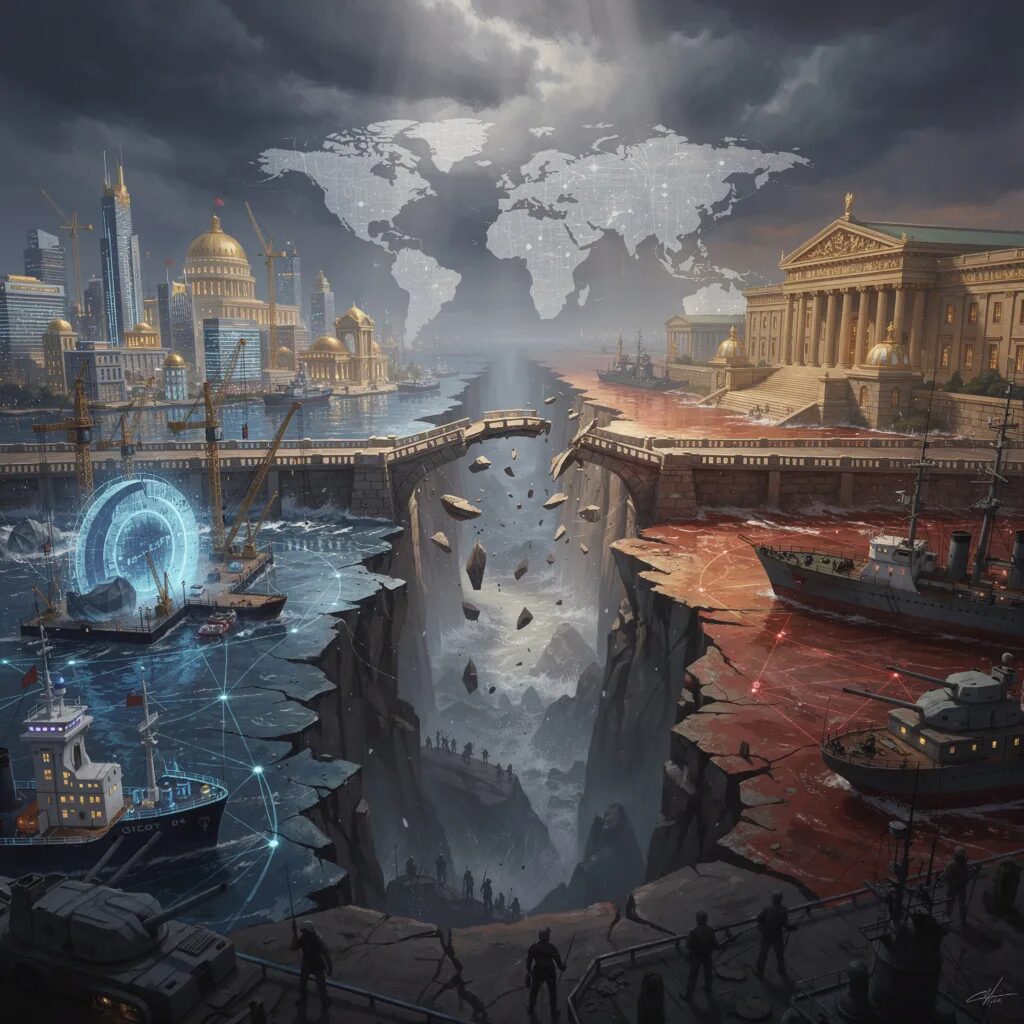
This is a political and historical theory popularized by Graham Allison, a political scientist at Harvard University, inspired by the Greek historian Thucydides, in explaining the causes of the Peloponnesian Wars between Athens and Sparta (431–404 B.C.), encapsulated in this singular phrase: “It was the rise of Athens and the fear this provoked in Sparta that made war inevitable.”
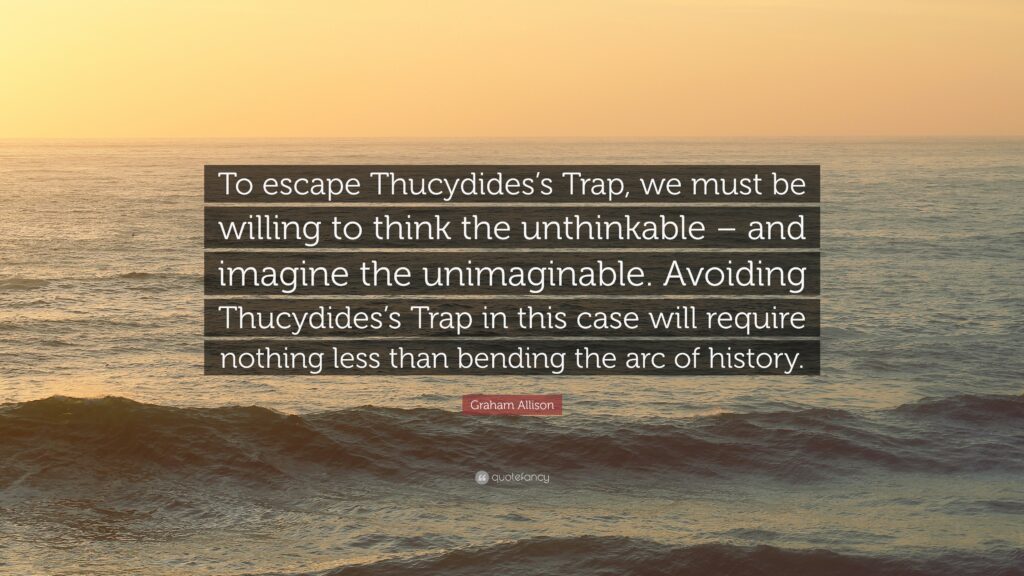
Xi’s message is clear: if the U.S. (the established power) feels threatened by being displaced by China (the emerging power), fear and mistrust will only fuel the rivalry between the two, pushing them toward conflict—or even a war devastating to both nations and all of humanity—which is why he advises dialogue, mutual understanding, respect, and cooperation.

Xi’s cautionary quote finds a parallel in Shakespeare’s “King Lear” (masterfully staged by Luís de Tavira at the Teatro Helénico). Let us recall that, in distributing his inheritance, Lear confuses true love with easy flattery and divides it only among his two eldest daughters (Goneril and Regan), who have falsely flattered him without limit, excluding the youngest (Cordelia), who has been sincere in her genuine love for her father. The tragedy reaches its greatest dramatic intensity with the blinding of Gloucester for his loyalty to Lear, which symbolizes the inability of the powerful to distinguish between reality and appearance and which blinds the politician due to excessive self-confidence in his power (“he stumbled when he saw”), and like the Titanic, he ends up sinking into the ruin caused by his confusion.
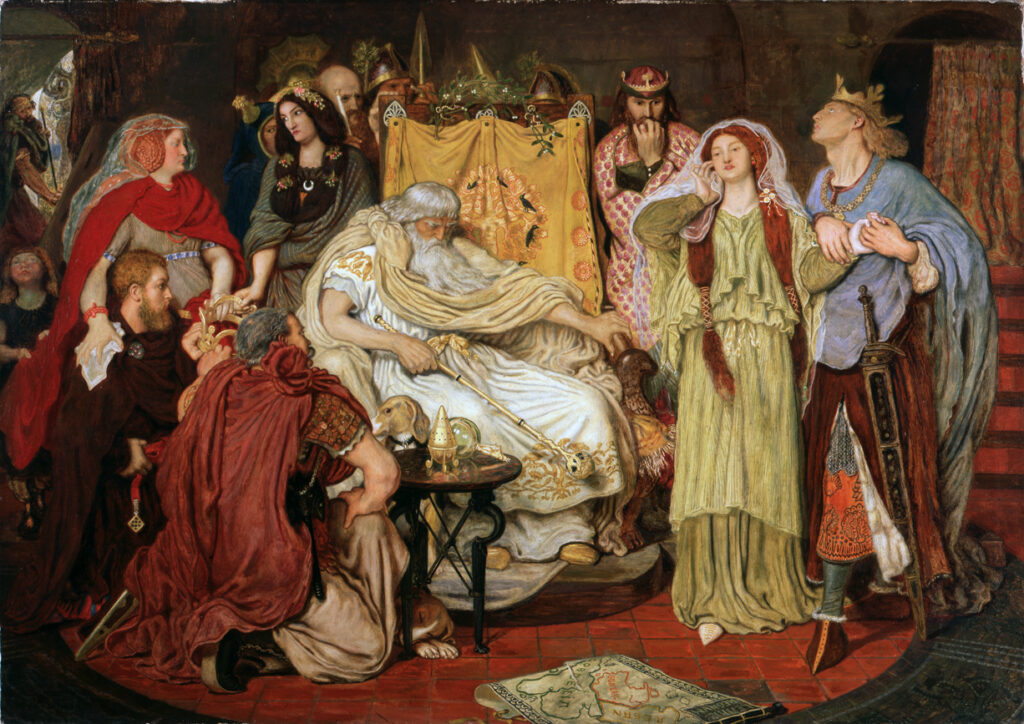
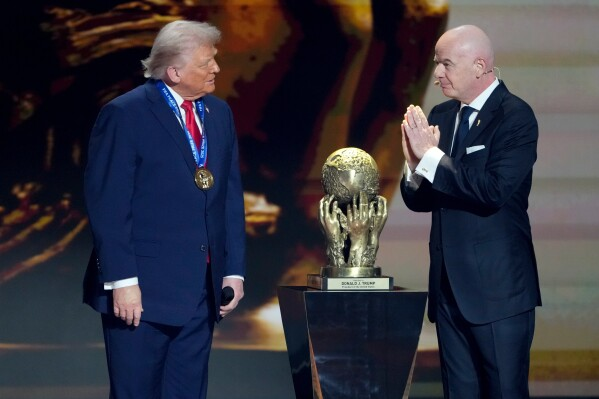
Trump suffers from a profound weakness for flattery (examples include the shameful acceptance of a replica of the Jules Rimet Cup, the medal presented to him by Gianni Infantino, president of FIFA, and the Nobel Prize medal given to him by María Corina Machado). Stumbling along, blind to the difference between flattery and true alliances, he leads the world’s greatest power, unable to see or understand the real world, which he irreversibly dismantles through his economic and military policies.
What Xi Jinping ultimately conveyed to Trump during his visit to China was that he had better learn the Shakespearean lesson in time and prevent his thirst for power and the illusion of MAGA from bringing down the U.S., like Lear’s kingdom, with grave consequences for humanity.

Further Reading: