
Prof. Jeffrey Sachs : Iran War is the End of US Hegemony.

Jeffrey Sachs is an esteemed economist and professor at Columbia University, known for his work in sustainable development. Andrew Napolitano, a retired judge and columnist, hosts the YouTube channel Judging Freedom. Together, they contribute to various discussions on economic and political issues, as highlighted in numerous linked videos and readings.

Challenges Facing Mexico’s Civil Society.

The content discusses the significance of civil society in democracy, inspired by Alexis de Tocqueville’s observations. It emphasizes the importance of social organizations for societal well-being and the economy. In Mexico, however, low interpersonal trust and state restrictions hinder civil society development, causing many organizations to remain inactive.

Larry Fink’s 2026 Annual Chairman’s Letter to Investors.

The letter emphasizes the importance of long-term investing amidst a climate of economic uncertainty marked by rising inequality and technological disruption. It advocates for expanding access to capital markets, highlighting that consistent investments can benefit both individuals and their countries, linking personal financial growth with broader economic progress.

Remaking the Middle East: The U.S., Israel and Iran.

The documentary “Remaking the Middle East: The U.S., Israel & Iran” examines the origins and consequences of the U.S.-Israel war with Iran. Updated in March 2026, it provides historical context on the conflict, highlighting decades of animosity, U.S. involvement, and the stakes for the Middle East amid ongoing hostilities.

Youth Challenges in Modern Society.

The text examines the complexities faced by contemporary youth, including the romanticization of youth as a positive force while grappling with issues like unemployment, mental health, and educational challenges. It highlights their frustrations with societal structures and questions the efficacy of youth participation in political movements, emphasizing the need for nuanced understanding and diverse solutions.

The “Domino Effect” of the War in Iran.

The US and Israeli military actions against Iran in February 2026 have escalated into a potential global conflict, adversely affecting the world economy. With the Strait of Hormuz at the center, energy prices have surged due to disrupted oil and gas supplies, leading to inflation and economic stagnation worldwide, particularly impacting Europe, Asia, and vulnerable emerging markets.

The Worst of the War.

What some in Washington once imagined as a possible political evolution ended up becoming the establishment of a radical clerical power that redefined the strategic balance in the Middle East for decades. Since then, the world has paid—and will probably continue to pay for a long time to come—the consequences of that historic turn of events. The worst thing about war is not what has already happened, but what may come in the form of revenge, score-settling, and miscalculation.

The Risk of the Electoral Counter-Reform on Mexico’s Democracy.

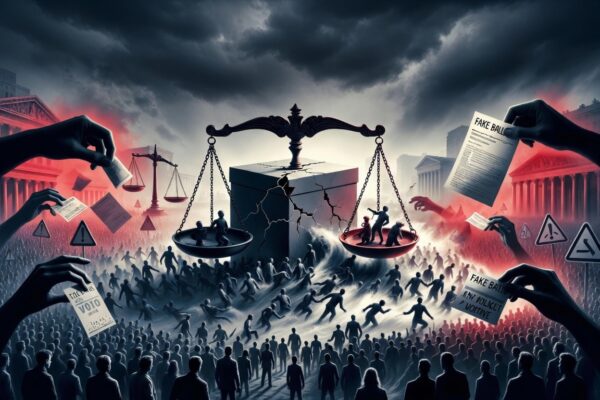
Mexico’s electoral reforms since 1958 reshaped its political landscape, but left unresolved issues similar to those of revolutionary France. Current counter-reforms by the Morena party aim to centralize power, risking democracy’s integrity. Historical patterns suggest a potential shift toward authoritarianism, echoing past mistakes in governance and stability.

The Importance of Rules and Their Compliance.

Rules are essential for creating order and enabling cooperation within society. They define acceptable behavior, protect individual rights, and facilitate complex interactions. However, the effectiveness of rules relies heavily on their enforcement. Without fair and consistent enforcement, rules become mere suggestions, eroding trust and potentially leading to chaos.

Future of Europe: Insights from the Munich Security Conference.

George Friedman discusses the implications of recent geopolitical shifts for Europe in his coverage of the Munich Security Conference. The content emphasizes the challenges Europe faces amid evolving global dynamics, urging a reassessment of established policies and strategies in light of emerging threats and opportunities for collaboration. Further reading is provided.

Shares