

Federico Reyes Heroles
In the early 19th century, one of sociology’s great founders, Émile Durkheim, wrote a book that would shake the academic world: *Suicide*. In it, in accordance with his positivist convictions, he develops an interpretation in which society—through its rigidity and behavioral norms—imposes pressures on the individual for which they are not psychologically prepared. Durkheim faced considerable criticism, but he sparked a discussion on a topic that has become increasingly broad and complex. Since then, authors such as Andrés Oppenheimer, in How to Get Out of the Pit!, have joined the debate.

Andrés wonders why, despite greater social satisfactions, a wave of discontent is sweeping the world. Stress, depression, and dissatisfaction are increasing day by day. Andrés traveled to Bhutan, declared the happiest country in the world, and found a clear link between the happiness index and biophilia—the need to be in nature, to live in harmony with it—as a notable factor there.

Returning to Durkheim, whose life refuted his own theory, would die in December 1917 at the age of 59. The causes: profound sadness and severe depression following the death of a son on the front lines. The cause of death: a cerebral hemorrhage. Durkheim discovered and championed social cohesion, which is now in crisis.
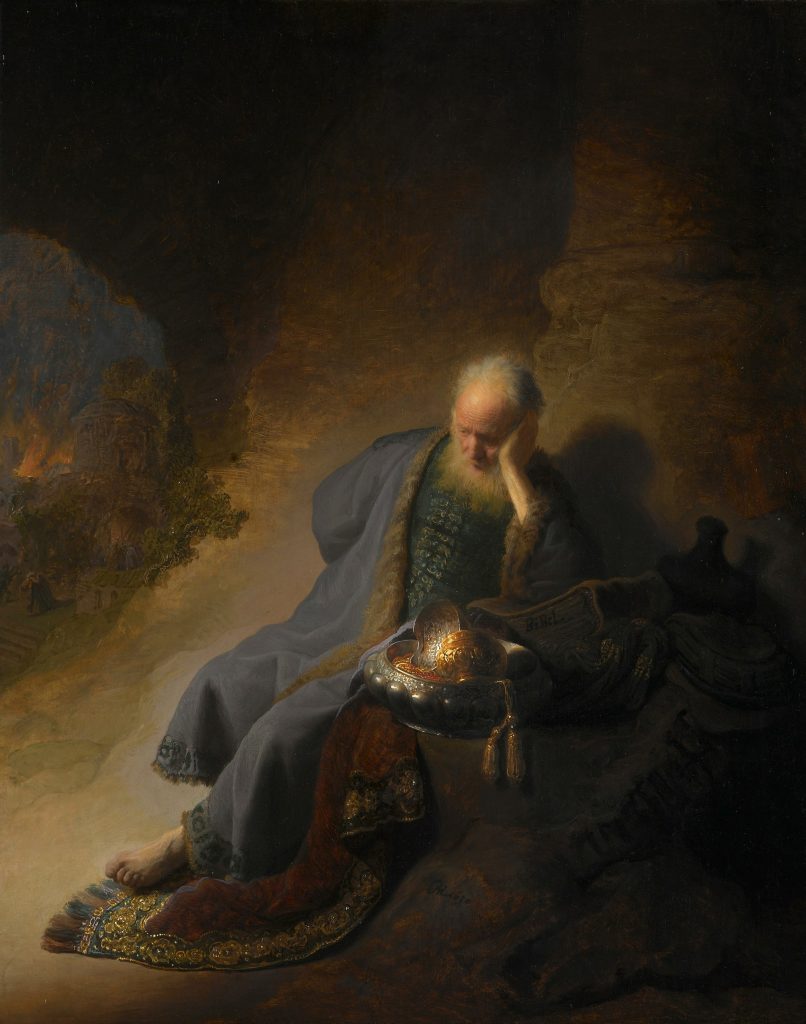
More recent authors, such as Cristina Monge in *Contra el descontento* (*Against Discontent*), propose the thesis that suicide is a reaction to the lack of “desirable futures.” Yesterday, our friend and fellow writer Mario Luis Fuentes addressed in his weekly column the most sensitive findings from the latest INEGI report. In 2025, there were 8,709 suicides in our country. The rate has only risen from 2015 to 2025; the increase was 1.6%, and today we stand at 7.35 per 100,000 inhabitants. It might seem like a minor issue—Greenland exceeds 75, but Egypt stands at 0.87. But when we break it down, the picture changes. Mario Luis Fuentes, one of the brightest minds in the social sciences in our country, offers his interpretation: “To live is to inhabit a world, to recognize oneself within it, and to find possibilities from which and toward which to project oneself.” The future, then, means projects.

Let’s return to INEGI: men commit suicide nearly four times as often as women. But Mexicans between the ages of 30 and 44 account for over 17% of the total. It’s dramatic: one-third of suicides are committed by young people aged 15 to 29. Something is broken in our society. For Mario Luis, it is a crisis of the future. More than 70% of suicides occur inside homes. “Family comfort” is very fragile.

In *The Principle of Hope* by Ernst Bloch, a great German philosopher, a sentence resonates: “But the one who dreams believes he finally knows what life has to offer.” Many young people’s dreams vanish day by day. The literature on this topic is vast; these are just a few examples from pioneering thinkers. Viktor Frankl, an existential philosopher and Holocaust survivor—the author of *Man’s Search for Meaning*, his famous study conducted in a concentration camp—addresses this emptiness in another text, *Facing the Existential Void*.

The nation’s state is dire. According to Aurelio Nuño, for the first time, there are more scholarships than students. UNAM has had to set up a unit to address students’ psychosocial problems. School dropout rates are high at all levels. This signals the demise of an implicit value in Mexico: social mobility. “He’s gotten ahead,” we say, “he’s done well”—and that’s enough to understand what it’s all about. The economy is growing more slowly than the population. Without a faster pace (CEEY), 50% of people born into the lowest income quintile will remain there. 28% will not rise above the second quintile. Only 2% will reach the highest quintile. Of those in the lowest quintile, 40% will complete elementary school; 35% will complete middle school; 16% will complete high school; and only 1% will go on to higher education.

This sense of hopelessness is justified, and there are those responsible for it.

Further Reading: